



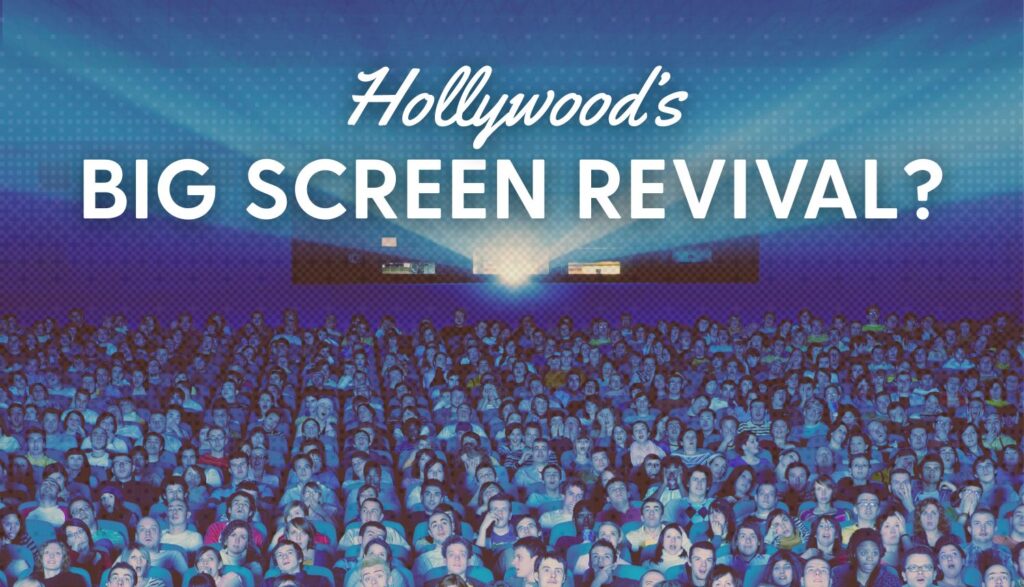
When you hear about films such as Toy Story 5 and The Odyssey clearing $500 million domestically and Spider-Man: Brand New Day stretching its web toward box office earnings of a cool billion dollars (all within a series of four or five weeks), you might be tempted to think that 2026 is the year when Hollywood finally finds its groove again. It certainly seems like the studios have finally figured out how to make something good once more.
However, it’s not really as simple as that. In fact, Hollywood’s new “groove” isn’t all that new at all. It’s actually a collection of savvy business choices that today’s movie moguls have plucked from the past and dusted off for reuse.
The Threat of TV
You see, back in the 1950s when televisions began to really take over the American home, Hollywood studios were in an outright panic. The public was snatching up those small boxes with their little black and white screens and rejoicing. Why go into town and pay outrageous ticket prices, when they could hang on to their cash (a whopping two bucks for a family of four), eat dinner together and watch their little screens in the privacy of their own homes?
A threatened Hollywood fought back by creating larger-than-life spectacles that the Jones family couldn’t possibly see on their tiny home sets. They introduced sweeping, widescreen cinematic formats like CinemaScope and VistaVision. (Why, even the names sounded big and important.)
1950s Hollywood invested in rich Technicolor processes designed to dazzle those black-and-white-accustomed eyes. Then they started introducing hyped up gimmicks such as 3D films and Sensurround audio. And for those who still dragged their I-wanna-stay-in-my-jammies-and-not-pay-so-much heels, movie makers expanded their drive-in offerings. A whole suburban family could pile into the station wagon for a low price and bring blankets and pillows along to boot.
It all worked like a charm, and Americans flooded back to the silver screens.
The Threat of Smartphones
Now we get back to today. After the Covid lockdowns in the early 2020s, people grew accustomed to sitting in dark rooms with their pupil-dilated eyes glued to a little phone in their mitt. We have access to literally millions of hours of movies, TV shows and social media content. We can plug in our earbuds and get great stereophonic sound.
Why go to the movies with outrageous prices when we can all sit in our jammies, gobble chips and watch our individual screens?
So this time Hollywood has responded and revitalized the theatrical box office with … pretty much the exact thing they did before. They’re treating the public to an upscale, must-see spectacle that the Jones Jr. family can’t possibly duplicate with their iPhones and laptops.
Think about it: Have you ever worried much about the fact that a film was shot and projected in the “amazing spectacle” of 70mm? For that matter, did you know that a bunch of films have used that format? For most people, the answer is probably no. But we sure heard a lot about it with Christopher Nolan’s The Odyssey. In fact, “70mm” became a huge selling point for that film.
And the fevered masses were willing to pay big mark-up prices to see The Odyssey in a theater that supported that “true” floor-to-ceiling format. Those cinemas sold out in minutes. And the disappointed fans mollified themselves by at least catching the pic in a premium IMAX or Dolby format and then seeing it later in 70mm.
Premium is Premium, Don’tcha Know
The fact is that premium formats and high-end tech of many stripes are today’s VistaVision. You can’t get IMAX, 70mm projectors, 4DX, Dolby Cinema and UltraScreen DLX (among others) on your phone. Oh, but that’s not all. If you look closely, you’ll also see other “events” driving those big money movies this year. Spider-Man: Brand New Day and Toy Story 5 both used the “Fandom” strategy. The filmmakers essentially showcased their releases as tentpole, collective social rituals that you’d regret missing.
Who doesn’t remember their childhood and their first Toy Story pic? Share the communal joy, Mom and Dad. Oh, and did you hear? The Marvel franchise has been floundering lately, but the new Spidey pic not only launches the whole next Marvel chapter but—shh!—there’s a secret character in this movie that reviewers are forbidden to talk about! Quick, get me a ticket!
Now, don’t get me wrong, I’m not complaining that Hollywood is pulling out its old playbook. In some ways, I’m happy for it. I personally like a little razzle dazzle in my moviegoing entertainment. And as a Plugged In writer, I also like the fact that there are good entertainment options pulling people young and old out of their self-imposed darkened rooms and little-screen closets.
Revival All Around
When the box-office numbers dropped by 80% back in 2020, people were suggesting that moviegoing was over, kaput, especially for young people. However, the fact is that Gen Z is actually leading this theater-attending revival. They make up nearly 40% of domestic moviegoers, turning trips to the movie house into active, offline social events. Going to the movies offers people a rare chance to disconnect from all that digital-screen noise in favor of sharing some physical space and joining in some fun community interaction.
That’s a good thing in my book.
Now we just have to convince Gen Z and Gen-Everybody Else to rely on Plugged In for a little help with their moviegoing choices. Hey, might as well mix that fun community interaction with some fun, uplifting movies, I say. And we welcome Hollywood’s old playbooks on that revival front, too.

One Response
My Odyssey 70mm IMAX screening was completely filled. I was so happy. I was cheering to a coworker how I managed to get tickets, and he said he’d wait until he could watch it on streaming, and sure, that’s an option, but the spectacle is part of the movie, just like how watching some movies at least once in 4DX motion simulation (e.g., Super Mario Galaxy) feels like a non-negotiable part of the experience.