


A robot is purchased as an “artificial friend” for a brilliant, but sickly, girl and tries to help fix her world. Actress Jenna Ortega is a standout here, and there’s a lot of quirky potential in this movie. But it all ends in a disjointed mishmash, sprinkled with crude language.
One look at Klara and you can tell that she’s not exactly a top-shelf artificial friend (or AF). She’s just a bit … odd. Part of that is because she’s an obsolete B-1 model. The B-3s are all sleek, muscular and beautiful. And they come with the latest personality modules.
The B-1s, however, were designed to learn from their users. So, in a way, they start out as rather wide-eyed and innocent adolescents. They adapt to their user’s needs and become the friends those users require. And they can sometimes pick up little quirks in the time between activation and purchase.
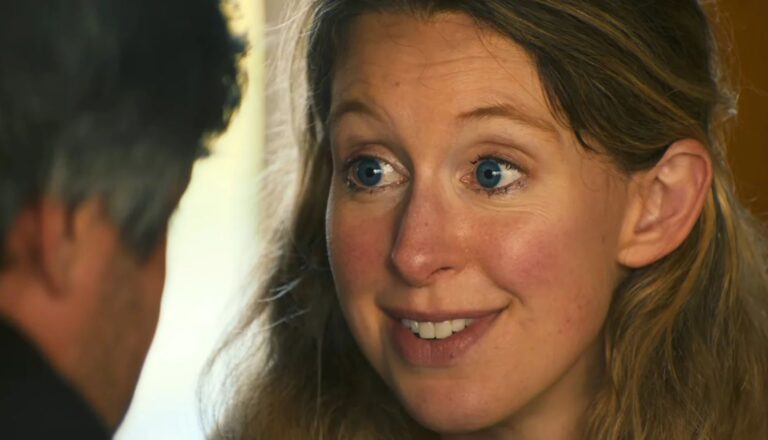
Klara, for instance, has been operating without an owner for a while now. So she has somehow picked up an innocent smile that seems to suit her well, an unruly mop of hair that never seems to brush into place and the cutesy tic of standing around on one leg—the other leg tucked comfortably up, left foot to right knee.
Oh, and Klara has developed a belief system all on her own, too. The B-1s use solar power. And Klara has taken to peeking out through the slats of the store’s metal shutters at the glorious, life-giving sun and whispering her thoughts and desires to that all-powerful, well, being.
Of course, Klara’s greatest desire is to be sold and taken to some wonderful owner’s home. And it has to happen quickly because her store’s manager has declared that if Klara and the other B-1s can’t find a home soon, they all may be shipped off to be recycled for parts. But since they’re now on sale for a steeply discounted price, maybe that’ll do the trick.
Yes, there’s a new B-3 shop just across the street. And in comparison, the B-1s look rather shabby. But, hey, as Klara takes her position in the store window—quirky grin and flamingo-like stance on full display—she attracts some attention. A young, sickly looking girl named Josie takes particular interest in her.
Josie’s mom, Chrissy, has no intention of buying an old B-1. But Josie reminds her mother that she was given permission to make her own choice. Klara is unquestionably the exact AF that Josie wants. And surely, Josie is the owner that the sun has sent for an excited B-1 named Klara.
When Klara gets to her new home, it is a wonderous revelation. Coming from the bustling, smog-shrouded city to the open beauty of the country—the house is surrounded on all sides by swaying fields of wheat—is an illuminating wonder. In fact, it’s all so bright and vast that Klara’s eyes have to constantly recalibrate.
However, there are much bigger things that Klara must adjust to—and much more pressing jobs for her to undertake—for there’s an obvious rift between Josie and her mom.
Josie has been “lifted,” for one thing, which essentially means that Chrissy opted to have her daughter’s genes adjusted, making Josie an instant genius. Josie can play piano like a virtuoso; she can paint like Rembrandt; she can read books by the score. But none of it has made her a happy teen. In fact, it may have made her as sick as she currently is. What good is a surefire spot in the best of schools if she doesn’t live long enough to attend?
As Klara connects with her beloved new owner—as she listens to the girl’s thoughts, worries, anxieties—she realizes that a true friend, a good friend would help Josie find happiness. And, if possible, a friend would help find a way to heal the many broken things in Josie’s life.
Klara realizes that those sorts of things may be beyond the grasp of a mere B-1 model like herself, but she has a secret that may make all the difference: Klara knows the sun!
After Klara meets Josie, she bonds with her human owner, and she is openly dedicated to Josie. In fact, everything Klara does is aimed at either improving Josie’s life (her health, her relationship with her mom) or stepping up to protect her. Klara is willing to put her existence on the line for her beloved owner. Klara declares in a brief moment of new awareness that “Josie’s specialness was found in the people around her that loved her.”
Josie sticks up for Klara, too. But as events unfold, Josie mistakes Klara’s choices—especially with Josie’s friend Rick—and then gets peevishly jealous of her AF.
Chrissy isn’t always as loving and attentive as she should be when it comes to Josie. But she later proclaims how much she loves her daughter (and Josie’s sister who died of natural causes years before). She apologizes for her actions and takes steps to heal her relationship with Josie.
Early on, Klara peeks through the slats of a metal shutter to see the morning sunrise, and she praises the sun for its goodness, saying, “Thank you for your healing ways and infiniteness.” She also asks the sun repeatedly to send Josie some of his goodness and heal her from her illness. Later, when Klara expresses her belief in the sun to Josie, Josie quickly understands. “I agree. Every living thing on earth owes its existence to the sun,” she says.
After Josie experiences an adverse health episode, Chrissy asks a doctor how best to care for her daughter’s worsening health. “Pray,” the doc replies. After a difficult event, Chrissy angrily proclaims, “I just didn’t think that God would screw me over twice.”
Later in the film, something happens that Klara considers to be a miracle perpetrated by the sun. But people scoff at her belief and make it plain that they don’t believe the sun is a sentient being in any way. And the film implies repeatedly that faith in any “godlike” entity is the product of a weak mind.
Someone makes it plain that they believe that there is nothing special about humans and “nothing that can’t be recreated.”
There’s nothing overtly sexual about the B-3 AFs, however, we see several of them cycling through a storefront window: They’re all thin, fit and wearing form-fitting athletic clothing.
Klara spots a couple of people meeting in front of the store window she’s standing in. They embrace at the same time that the sun glares in Klara’s eyes. Thereafter, she believes that love is indicated by a light glare or glow around two people. “Is love shiny?” Klara asks a seasoned B-1.
Josie’s friend Rick loses his temper when things he’s working on don’t go perfectly. He smashes a robotic bird that he created, for instance. (We later learn that his anger flares, partially, because he isn’t “lifted” and must compete against other mentally boosted individuals his age.)
Josie falls ill several times. In some instances, it hits her like an epileptic fit; in other cases, she grows weak and falls unconscious. At one point, an attack leaves her with a profusely bleeding nose. Three kids get into a car wreck after losing control of the vehicle and crashing into some trees. Josie is in that group, and she passes out just before the crash.
Klara tries to climb over an electrified fence, and she’s zapped unconscious. Rick later finds her and says she almost fried her central processing unit, but he was able to get her started once again.
Klara and Rick come upon a robot that was ripped to pieces and rolled into a hay bale by a robotic harvester. They watch as the robot expires. Klara wonders what she just witnessed. “Death,” Rick tells her. Then Rick uses the bot’s very flammable internal fluids to burn the remains. It explodes in a massive fire.
That large robotic mech, belching massive amounts of sky-blackening pollution, becomes a symbolic monster that appears multiple times in the story. Later, Klara drives a screwdriver into her own neck in an effort to use some of her own flammable fluids to set a large machine on fire.
Someone tries to strangle and drown Klara. But because the AF has no lungs, all the attack does is fill her body with water, which she then expels in a gush. During a party for a group of lifted teens, one teen picks up a B-3 AF and throws it. The bot nimbly regains its footing. Then someone throws Klara, and she lands face-first in a crumple. A human boy is thrown through a window and crashes down into another room.
One f-word and four or five s-words are joined by 16 exclamations of “crap,” a half-dozen uses of “h—” and several uses each of the words “d–n” and “a–.” God’s name and Jesus’ name are both misused a total of seven times (two of those combining God with “d–n”).
Chrissy puffs on an e-cig device. A doctor gives Chrissy a prescription medication for Josie. Josie is put in bed with an IV drip.
Early on, the store manager repeats several “rules” to her B-1 bot charges. One of them is to “shut up” during conflict and always “take the blame.” Early on, someone notes that humans abused the internet, which “started World War 3.” After that conflict, the internet was apparently shut down. The B-1s are threatened with the possibility of being melted down for new parts if they aren’t sold.
Klara can believably mimic anyone’s voice. And Josie pushes her to mimic Chrissy’s voice so they can take her mom’s voice-controlled car out for a joyride. During a tense discussion with Klara, Chrissy yells at the bot about her useless artificial nature. And then Klara points out that the often less-than-attentive Chrissy is “like an artificial mother.”
Klara and the Sun presents a dystopian future, a post-World War III place where mankind has finally stepped away from the problem-amplifying threats of the internet. But after doing so, good old humanity has foolishly waded straight into a whole new danger zone of DNA manipulation.
So now, parents can remake their children into “perfect” geniuses. (Never mind the potential ticking bomb now stitched into their chromosomes.) And, to avoid having to deal with annoying things like parental responsibilities or relationships, those “loving” maters and paters can also give their children solace through robotic friends.
Yep. That sounds like a very believable prediction of where our technological progress might someday lead us.
That’s also where director Taika Waititi lets his version of the tale (based on the Kazuo Ishiguro novel of the same name) burst up on the screen with a cute and quirky robotic whir. He introduces us to the artificial friend, Klara, portrayed endearingly by actress Jenny Ortega. And suddenly, we get the impression that this innocent AF may just learn and grow with her new family and somehow lead them to a cute and quirky resolution.
Hey, this photovoltaic cell-charging bot even looks to the sun as a god-like entity that watches over and helps those on Earth with its warm and healing rays. Klara truly believes that if she can give of herself, and sacrifice for her beloved, sickly young owner, that the sun will bring the girl back to health.
So, is it possible that this film might even introduce some spiritual symbolism into its heartfelt solutions? That would be nice, wouldn’t it? But that’s not what we get.
After a promising first act, Klara and the Sun stumbles in perplexing and muddled ways. The film kinda-sorta tries to tie up its many odd and jangling plot threads, but it never quite finds the emotional resolution that it shoots for. There are some nice things said, but the moments are fumbled. And if anything, the spiritual symbolism of the film ends up sneering at faith, suggesting that looking for God is only viable for those who are a few semiconductors short of a full CPU.
So, instead of future AI warnings (which are more prevalent in Kazuo Ishiguro’s novel) or a sweet tale of familial and/or godly love, we get a disjointed mishmash sprinkled with crude language. Even the cheery Klara would likely note that this pic misses the sunny mark.

After spending more than two decades touring, directing, writing and producing for Christian theater and radio (most recently for Adventures in Odyssey, which he still contributes to), Bob joined the Plugged In staff to help us focus more heavily on video games. He is also one of our primary movie reviewers.